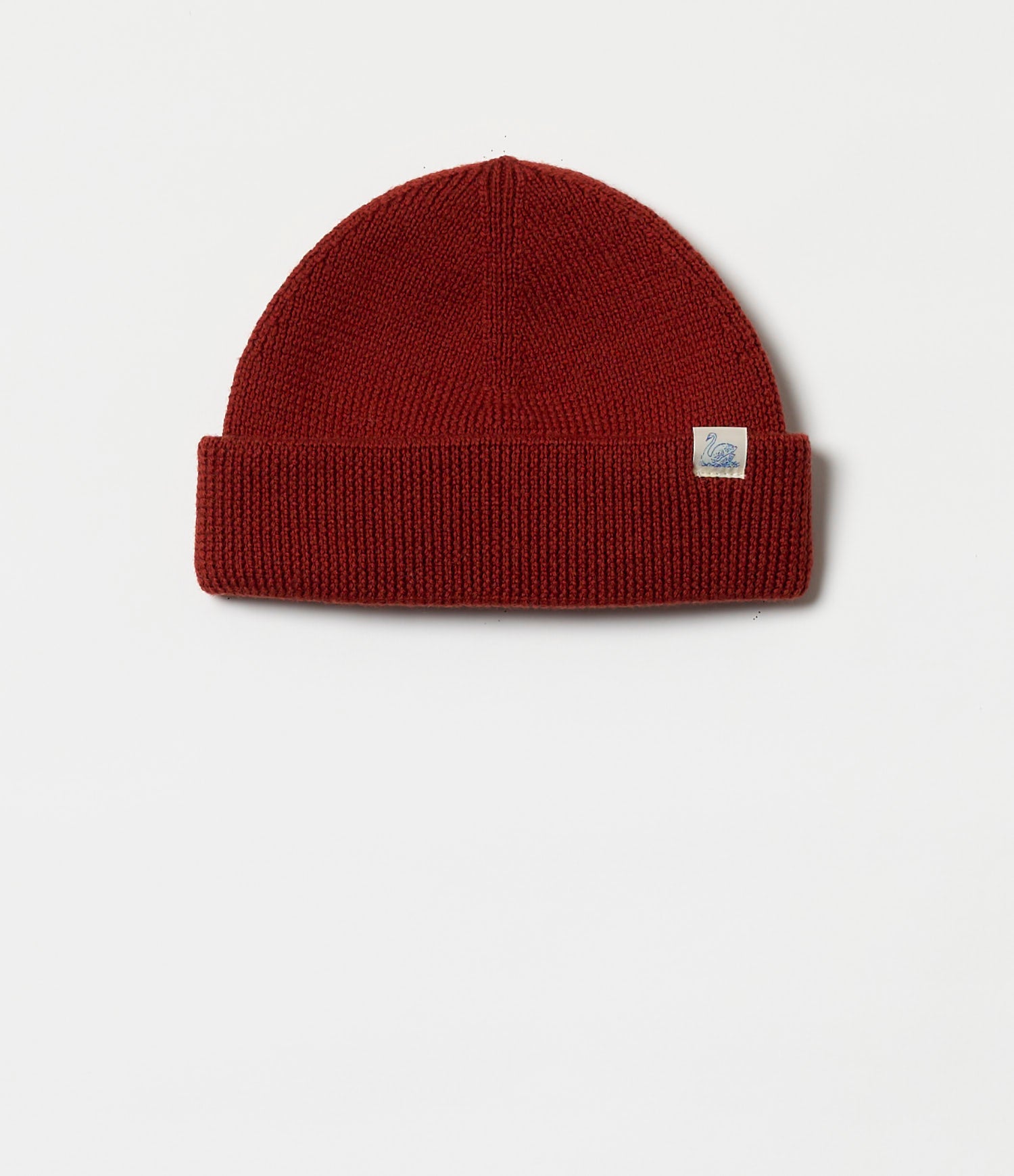

Merz b. Schwanen
It all began with a henley shirt, more than 90 years old, from a Berlin flea market.
Gitta and Peter Plotnicki both studied fashion design, and Peter is also a trained men's tailor. They immediately sensed that this find was a very special item. They held an original worker's henley from 1911 in their hands.
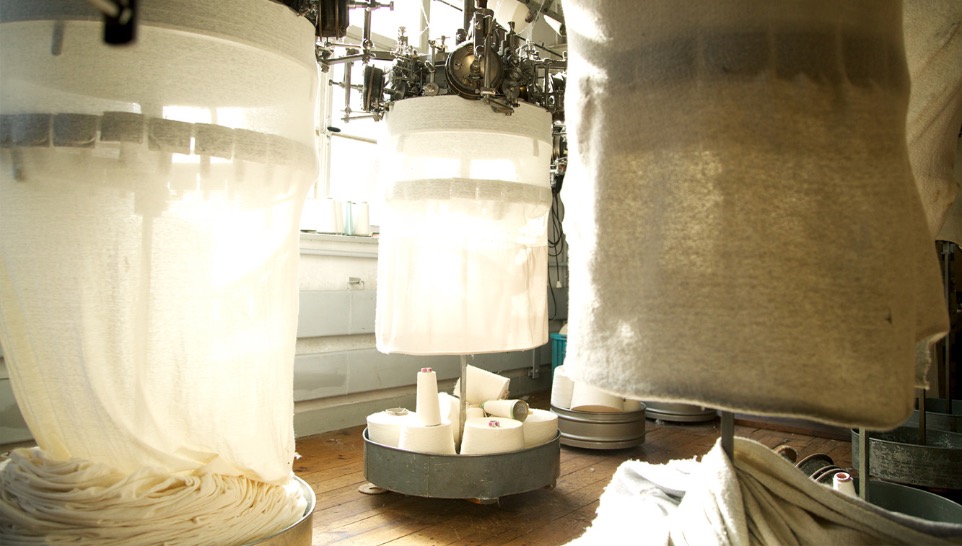
The search for the henley’s origin led the two to the Swabian Alb in Germany. Once a thriving center of textile manufacturing, the region's factories went silent decades ago with the 20th century's race toward mass production, automation, and ubiquity. In Albstadt, Gitta and Peter met one of the region's last textile manufacturers, Rudolf Loder, who invited the couple to see something very special. In a disused factory stood rows of authentic loopwheelers, already gathering dust. The original circular knitting machines, whose origins date back from 1889 to the 1960s, are the only loopwheelers still in existence in Germany.
For Gitta and Peter, the machines were signposts to the past, which they did not yet know would also determine their future. The thread that ties everything together – past, present, and future – is the Merz b. Schwanen brand.
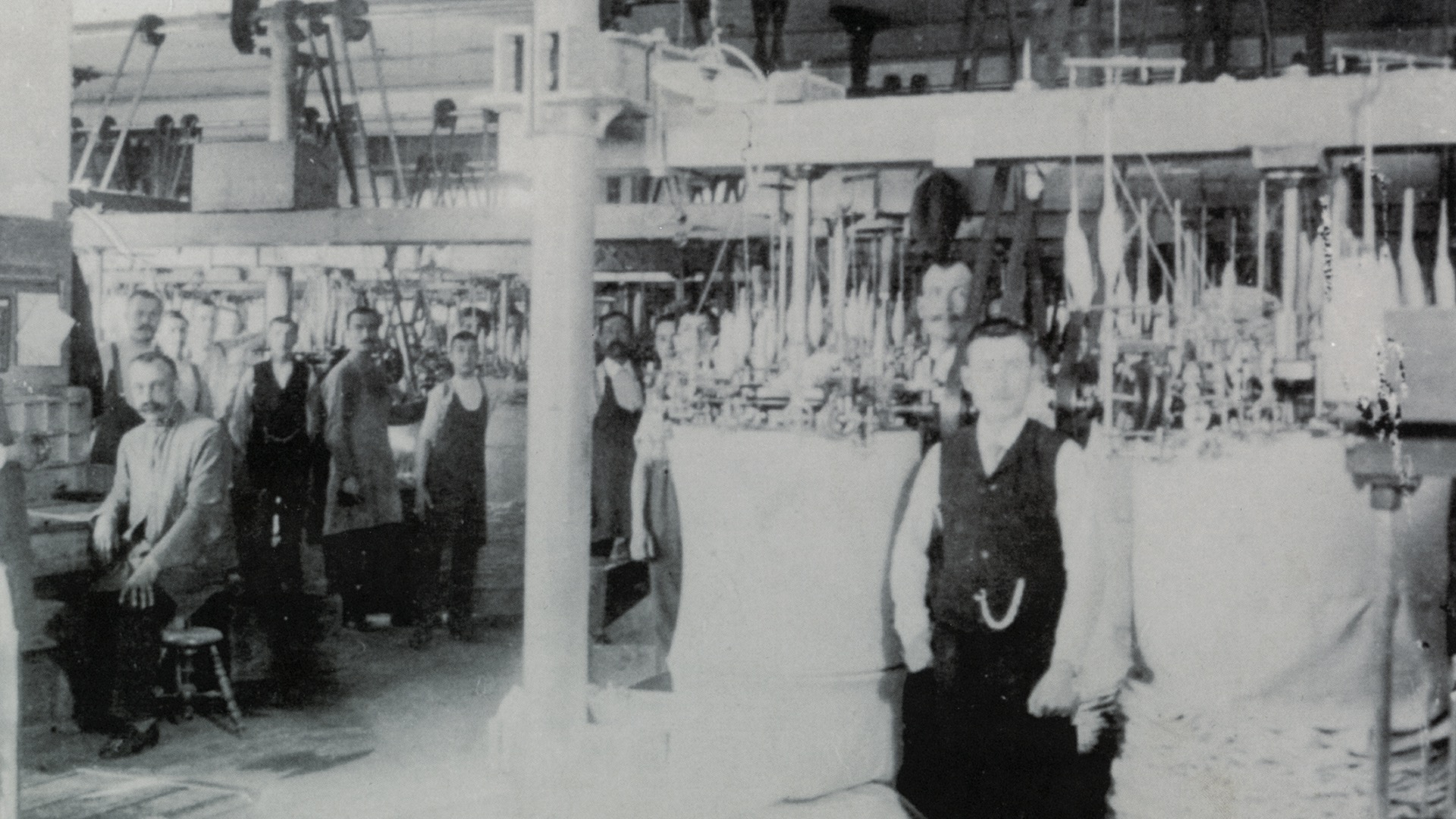
Founded in 1911 by Balthasar Merz, Merz b. Schwanen manufactured circularly knitted worker shirts and underwear. In 2005, the brand ceased operations. In the Albstadt factory, the idea of reviving the loopwheelers was born, and the seeds for a new endeavor were sown.
By a fortunate turn of fate, the descendants of Balthasar Merz learned of Gitta and Peter's plans and generously offered their old brand name, "Merz b. Schwanen." This gesture imbued the new venture with over a century of company, regional, and production history.
13 products
Merz b. Schwanen